


World Wide Suppliers of Industrial Sapphire&Ruby Precision Parts
Sapphire to Metal for Fluidic,Metrology&Medical Components
ISO 9001:2019 Mfg&Managment Certified Companies
-
Home
-
Products

- ALL products
- Custom Sapphire Optical Lenses
- IPL Filters & Light Guides
- Sapphire Optical Prisms
- Precision Zirconia Ceramic Parts
- Single Crystal Silicon Carbide(SiC 6H/ 4H)
- Custom Optical Windows
- Optical Lens
- Sapphire Substrates & Wafers
- CMM Styli & Probe Tips
- Precision Sapphire Orifice Jewels
- Sapphire Windows
- Jewel Bearing
- Custom Sapphire Tubes & Rods
- Ruby, Sapphire & Ceramic Balls and Hemispheres
- Ruby Orifice Nozzles & Fittings
- Sapphire&Ruby Assembly Parts
- Sapphire & Ruby Nozzles
- Custom Shaped Sapphire Parts
-
Material
-
Applications
-
About Us
-
Resources
-
Contact Us
-
- Custom Sapphire Optical Lenses
- IPL Filters & Light Guides
- Sapphire Optical Prisms
- Precision Zirconia Ceramic Parts
- Single Crystal Silicon Carbide(SiC 6H/ 4H)
- Custom Optical Windows
- Optical Lens
- Sapphire Substrates & Wafers
- CMM Styli & Probe Tips
- Precision Sapphire Orifice Jewels
- Sapphire Windows
- Jewel Bearing
- Custom Sapphire Tubes & Rods
- Ruby, Sapphire & Ceramic Balls and Hemispheres
- Ruby Orifice Nozzles & Fittings
- Sapphire&Ruby Assembly Parts
- Sapphire & Ruby Nozzles
- Custom Shaped Sapphire Parts
Optical Lens
Precision lenses for focusing, collimating, imaging and beam-shaping applications.:
Microwork supplies custom optical lenses for applications requiring controlled focal length, surface quality, centration and wavelength-specific coating performance.
Unlike optical windows, which are mainly used as flat protective or transmission components, optical lenses are designed to focus, collimate, expand, reduce or reshape light within an optical system. Lens performance is strongly affected by curvature, focal length, center thickness, edge thickness, surface quality, centration and coating design.
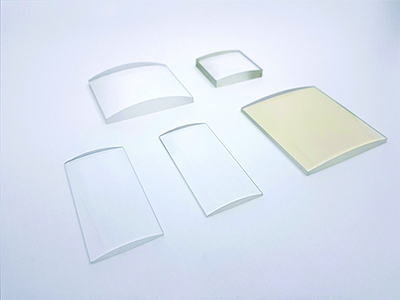
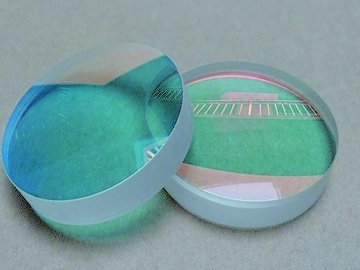
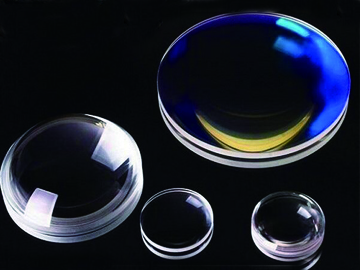
Available lens types may include plano-convex, plano-concave, bi-convex, bi-concave, meniscus, cylindrical, ball and small custom optical lenses. Material options can be reviewed according to wavelength range, optical design, environmental conditions and cost target.
For sapphire-specific lens designs requiring high hardness, scratch resistance, chemical resistance or high-temperature stability, please refer to our Sapphire Optical Lenses page.
Available Lens Types:
Common lens configurations may include:
• Plano-convex lenses
• Plano-concave lenses
• Bi-convex lenses
• Bi-concave lenses
• Meniscus lenses
• Cylindrical lenses
• Ball lenses and half-ball lenses
• Small custom optical lenses and micro-optics
Custom lens geometry can be reviewed based on diameter, focal length, radius of curvature, center thickness, edge thickness, material and coating requirements.
Key Lens Parameters:
Important lens parameters typically include:
• Lens diameter and clear aperture
• Focal length
• Radius of curvature
• Center thickness and edge thickness
• Surface quality
• Surface accuracy
• Centration
• Edge finish
• Coating wavelength range
• Operating temperature and mounting method
Engineering Considerations:
When designing a custom optical lens, engineers should consider how focal length, curvature, centration, surface quality and coating performance affect the final optical system.
Small lenses, steep curvature, tight centration, thin edges, high surface quality and special coatings can increase manufacturing difficulty, lead time and cost. Mounting stress should also be reviewed because mechanical pressure can affect optical alignment or damage fragile lens edges.
For quotation, please provide the drawing, lens type, material preference, diameter, focal length, radius of curvature, surface quality, centration requirement, coating requirement and operating wavelength.
Need a Custom Optical Lens?
Send us your drawing, lens type, material preference, focal length, coating requirement and operating conditions. We can help review manufacturability and key technical risks before quotation.
Optical Lens
Precision lenses for focusing, collimating, imaging and beam-shaping applications.:
Microwork supplies custom optical lenses for applications requiring controlled focal length, surface quality, centration and wavelength-specific coating performance.
Unlike optical windows, which are mainly used as flat protective or transmission components, optical lenses are designed to focus, collimate, expand, reduce or reshape light within an optical system. Lens performance is strongly affected by curvature, focal length, center thickness, edge thickness, surface quality, centration and coating design.
Available lens types may include plano-convex, plano-concave, bi-convex, bi-concave, meniscus, cylindrical, ball and small custom optical lenses. Material options can be reviewed according to wavelength range, optical design, environmental conditions and cost target.
For sapphire-specific lens designs requiring high hardness, scratch resistance, chemical resistance or high-temperature stability, please refer to our Sapphire Optical Lenses page.
Available Lens Types:
Common lens configurations may include:
• Plano-convex lenses
• Plano-concave lenses
• Bi-convex lenses
• Bi-concave lenses
• Meniscus lenses
• Cylindrical lenses
• Ball lenses and half-ball lenses
• Small custom optical lenses and micro-optics
Custom lens geometry can be reviewed based on diameter, focal length, radius of curvature, center thickness, edge thickness, material and coating requirements.
Key Lens Parameters:
Important lens parameters typically include:
• Lens diameter and clear aperture
• Focal length
• Radius of curvature
• Center thickness and edge thickness
• Surface quality
• Surface accuracy
• Centration
• Edge finish
• Coating wavelength range
• Operating temperature and mounting method
Engineering Considerations:
When designing a custom optical lens, engineers should consider how focal length, curvature, centration, surface quality and coating performance affect the final optical system.
Small lenses, steep curvature, tight centration, thin edges, high surface quality and special coatings can increase manufacturing difficulty, lead time and cost. Mounting stress should also be reviewed because mechanical pressure can affect optical alignment or damage fragile lens edges.
For quotation, please provide the drawing, lens type, material preference, diameter, focal length, radius of curvature, surface quality, centration requirement, coating requirement and operating wavelength.
Need a Custom Optical Lens?
Send us your drawing, lens type, material preference, focal length, coating requirement and operating conditions. We can help review manufacturability and key technical risks before quotation.


-
Chonghong Industries(Microwork)Ltd.
 1803,2006,Huachuang Building
 Honghuang 10th Road Jiangbei District
Chongqing China 400020
 0086 023 67937146
 0086 18623135040
 sales@ch-microwork.com
 13500373464