


World Wide Suppliers of Industrial Sapphire&Ruby Precision Parts
Sapphire to Metal for Fluidic,Metrology&Medical Components
ISO 9001:2019 Mfg&Managment Certified Companies
-
Home
-
Products

- ALL products
- Custom Sapphire Optical Lenses
- IPL Filters & Light Guides
- Sapphire Optical Prisms
- Precision Zirconia Ceramic Parts
- Single Crystal Silicon Carbide(SiC 6H/ 4H)
- Custom Optical Windows
- Optical Lens
- Sapphire Substrates & Wafers
- CMM Styli & Probe Tips
- Precision Sapphire Orifice Jewels
- Sapphire Windows
- Jewel Bearing
- Custom Sapphire Tubes & Rods
- Ruby, Sapphire & Ceramic Balls and Hemispheres
- Ruby Orifice Nozzles & Fittings
- Sapphire&Ruby Assembly Parts
- Sapphire & Ruby Nozzles
- Custom Shaped Sapphire Parts
-
Material
-
Applications
-
About Us
-
Resources
-
Contact Us
-
- Custom Sapphire Optical Lenses
- IPL Filters & Light Guides
- Sapphire Optical Prisms
- Precision Zirconia Ceramic Parts
- Single Crystal Silicon Carbide(SiC 6H/ 4H)
- Custom Optical Windows
- Optical Lens
- Sapphire Substrates & Wafers
- CMM Styli & Probe Tips
- Precision Sapphire Orifice Jewels
- Sapphire Windows
- Jewel Bearing
- Custom Sapphire Tubes & Rods
- Ruby, Sapphire & Ceramic Balls and Hemispheres
- Ruby Orifice Nozzles & Fittings
- Sapphire&Ruby Assembly Parts
- Sapphire & Ruby Nozzles
- Custom Shaped Sapphire Parts
Precision Zirconia Ceramic Parts
Precision Zirconia Ceramic Parts
Custom ZrO2 ceramic components for applications requiring high toughness, wear resistance and corrosion resistance.
Microwork supplies custom zirconia ceramic parts for applications where wear resistance, corrosion resistance, electrical insulation, dimensional stability and mechanical toughness are required.
Zirconia, or ZrO2, is a technical ceramic known for its high fracture toughness compared with many other ceramic materials. This makes it suitable for precision components that may experience mechanical load, contact stress, sliding wear or assembly with metal parts.
Compared with alumina ceramic, zirconia generally offers higher toughness and better resistance to crack propagation. Compared with sapphire, zirconia is not transparent, but it can be a practical choice for structural ceramic parts where strength, toughness, corrosion resistance and assembly reliability are more important than optical performance.
Custom zirconia components can be reviewed based on drawing, tolerance, surface finish, geometry, mating material and operating conditions.
Typical Zirconia Components
Common zirconia ceramic components may include:
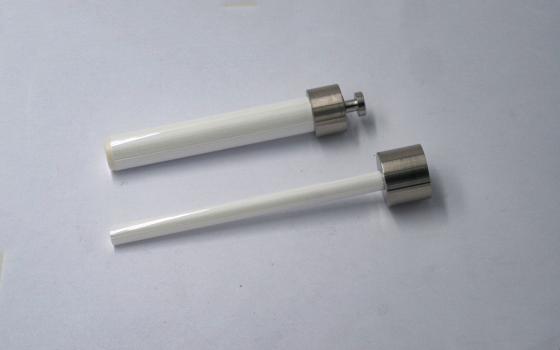
• Ceramic shafts and plungers
• Valve components and stoppers
• Sleeves, bushings and guide parts
• Wear-resistant pins and spacers
• Insulating ceramic components
• Precision custom-shaped ceramic parts
• Ceramic components assembled with metal parts
Custom geometries can be reviewed according to tolerance, surface finish, edge condition and assembly method.
Typical Specifications
Material: Zirconia ceramic / ZrO2
Color: White or black, depending on material grade
Geometry: Rods, shafts, plungers, sleeves, discs, custom-shaped parts
Tolerance: Custom tolerance available upon drawing review
Surface finish: Fine ground or polished depending on application
Edge condition: Chamfered, rounded or fine-ground edges available
Assembly: Metal-mounted or mating metal components can be reviewed
Application environment: Wear, corrosion, insulation, sliding contact or structural use
Engineering Considerations
When designing zirconia ceramic parts, engineers should consider mechanical load, mating material, sliding contact, tolerance stack-up, edge condition, surface finish and the risk of stress concentration.
Zirconia is tougher than many technical ceramics, but sharp internal corners, thin walls, high aspect-ratio features and press-fit designs still require careful review. For components assembled with metal parts, thermal expansion, fit tolerance and mounting stress should be considered during design.
For early-stage projects, please provide the drawing, material grade if specified, operating temperature, mating material, load condition, tolerance requirement and surface finish requirement.
Zirconia vs Alumina vs Sapphire
Zirconia is often selected when toughness and resistance to crack propagation are important. Alumina is commonly used when hardness, insulation and cost efficiency are key factors. Sapphire is preferred when optical transparency, extreme hardness and chemical resistance are required.
For structural ceramic parts, zirconia can be a strong option where the component must withstand contact stress, sliding wear or assembly with metal. For optical or transparent components, sapphire or optical materials may be more suitable.
Need a Custom Zirconia Ceramic Component?
Send us your drawing, target material, tolerance requirement, surface finish, mating material and operating conditions. We can help review manufacturability, material suitability and key design risks before quotation.
Precision Zirconia Ceramic Parts
Precision Zirconia Ceramic Parts
Custom ZrO2 ceramic components for applications requiring high toughness, wear resistance and corrosion resistance.
Microwork supplies custom zirconia ceramic parts for applications where wear resistance, corrosion resistance, electrical insulation, dimensional stability and mechanical toughness are required.
Zirconia, or ZrO2, is a technical ceramic known for its high fracture toughness compared with many other ceramic materials. This makes it suitable for precision components that may experience mechanical load, contact stress, sliding wear or assembly with metal parts.
Compared with alumina ceramic, zirconia generally offers higher toughness and better resistance to crack propagation. Compared with sapphire, zirconia is not transparent, but it can be a practical choice for structural ceramic parts where strength, toughness, corrosion resistance and assembly reliability are more important than optical performance.
Custom zirconia components can be reviewed based on drawing, tolerance, surface finish, geometry, mating material and operating conditions.
Typical Zirconia Components
Common zirconia ceramic components may include:
• Ceramic shafts and plungers
• Valve components and stoppers
• Sleeves, bushings and guide parts
• Wear-resistant pins and spacers
• Insulating ceramic components
• Precision custom-shaped ceramic parts
• Ceramic components assembled with metal parts
Custom geometries can be reviewed according to tolerance, surface finish, edge condition and assembly method.
Typical Specifications
Material: Zirconia ceramic / ZrO2
Color: White or black, depending on material grade
Geometry: Rods, shafts, plungers, sleeves, discs, custom-shaped parts
Tolerance: Custom tolerance available upon drawing review
Surface finish: Fine ground or polished depending on application
Edge condition: Chamfered, rounded or fine-ground edges available
Assembly: Metal-mounted or mating metal components can be reviewed
Application environment: Wear, corrosion, insulation, sliding contact or structural use
Engineering Considerations
When designing zirconia ceramic parts, engineers should consider mechanical load, mating material, sliding contact, tolerance stack-up, edge condition, surface finish and the risk of stress concentration.
Zirconia is tougher than many technical ceramics, but sharp internal corners, thin walls, high aspect-ratio features and press-fit designs still require careful review. For components assembled with metal parts, thermal expansion, fit tolerance and mounting stress should be considered during design.
For early-stage projects, please provide the drawing, material grade if specified, operating temperature, mating material, load condition, tolerance requirement and surface finish requirement.
Zirconia vs Alumina vs Sapphire
Zirconia is often selected when toughness and resistance to crack propagation are important. Alumina is commonly used when hardness, insulation and cost efficiency are key factors. Sapphire is preferred when optical transparency, extreme hardness and chemical resistance are required.
For structural ceramic parts, zirconia can be a strong option where the component must withstand contact stress, sliding wear or assembly with metal. For optical or transparent components, sapphire or optical materials may be more suitable.
Need a Custom Zirconia Ceramic Component?
Send us your drawing, target material, tolerance requirement, surface finish, mating material and operating conditions. We can help review manufacturability, material suitability and key design risks before quotation.

-
Chonghong Industries(Microwork)Ltd.
 1803,2006,Huachuang Building
 Honghuang 10th Road Jiangbei District
Chongqing China 400020
 0086 023 67937146
 0086 18623135040
 sales@ch-microwork.com
 13500373464